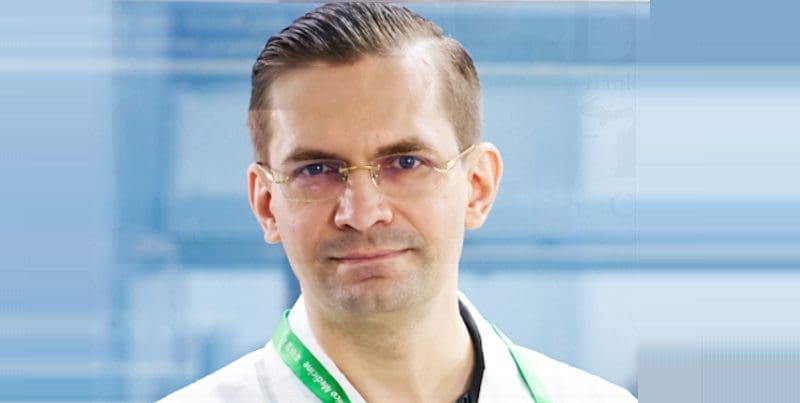
Alex Zhavoronkov, PhD, founder and CEO of Insilico Medicine, a clinical-stage biotechnology company leveraging generative AI for drug discovery, recently shared insights on the concept of Pharmaceutical Superintelligence (PSI) and the company's progress in an interview. Since 2014, Insilico has raised over $500 million, opened R&D centers in six countries, and advanced more than 20 preclinical candidates into clinical trials, including six human trials and a Phase II study.
Zhavoronkov defines PSI as a fully autonomous platform capable of discovering and designing a perfect small molecule or biologic drug, along with biomarkers for patient selection, producing a significant disease-modifying or curative response without failure. The idea originated from Insilico's early work on biomarkers and aging clocks, which evolved into modules like PandaOmics for target discovery and Chemistry42 for molecule design. The vision is to fully integrate these modules so they learn from each other continuously.
Key milestones include the QPCTL program advancing from discovery to development candidate in nine months and the TNIK candidate in 18 months. The TNIK program for idiopathic pulmonary fibrosis (IPF) showed positive Phase 2a results, with a +98 mL improvement in lung function over placebo, published in Nature Medicine. This validation underscores AI's potential in drug development.
To unlock the next phase of PSI, Zhavoronkov identifies four levers: open program-level benchmark repositories, distilling validated task-specific models into multimodal agents, pan-flute simulation cascades, and community reinforcement learning from experimental feedback. The teacher-student model preserves intelligence from validated models to train more capable successors.
Zhavoronkov predicts that the first fully AI-designed drugs will be available to patients within five to six years, citing Insilico's 40+ internal programs. He emphasizes that validation is key, and the convergence of large language models with specialized, validated models will drive PSI. The interview highlights that ten years ago, such progress was science fiction, but now AI-discovered targets and molecules are advancing through clinical trials, offering optimism for the future.