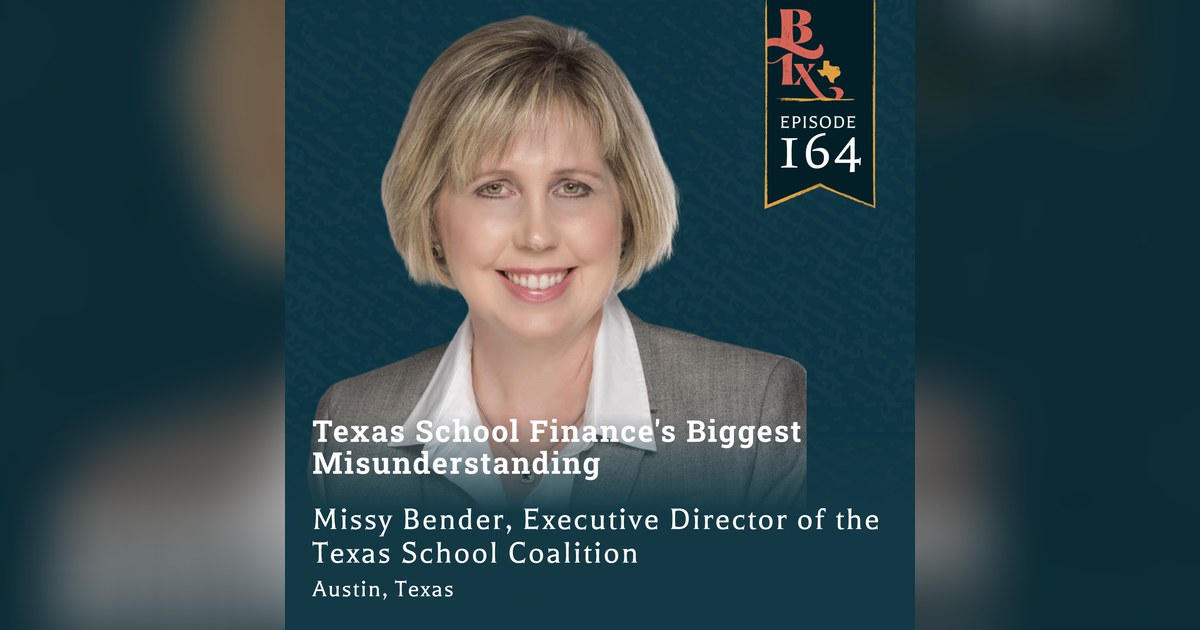
On the latest episode of The Building Texas Show, titled "Texas School Finance's Biggest Misunderstanding: Recapture Isn't Robin Hood," host Justin McKenzie and Missy Bender, Executive Director of the Texas School Coalition, dissect one of the state's most persistent policy myths. Recorded in Plano, the conversation challenges the common belief that recapture—the mechanism by which property-wealthy school districts send money back to the state—functions like Robin Hood, taking from the rich to give to the poor. Instead, Bender argues, it is a state savings tool.
In 2025, Texas schools sent nearly $3 billion to the state through recapture, with about 20% of all districts now paying. The top payers included Austin ISD at $770 million and West Texas oil district Pecos-Barstow-Toyah at $198 million. Bender explains that the program generates state savings, allowing the legislature to redirect funds to other priorities such as water, transportation, or vouchers. "So what does recapture do? It generates state savings," she tells McKenzie. "That's why I don't call it Robin Hood anymore. It's not the property wealthy helping the property poor, like many think, but it's only helping the state."
The episode delves into the mechanics of how recapture is triggered, focusing on the formula of property valuation divided by average daily attendance. Bender highlights the "double whammy" for districts like Plano ISD, which face declining enrollment alongside rising property valuations, pushing them into recapture. She also notes that a student leaving for a doctor's appointment can cost a district a full day of state funding, even when the absence is excused. Bender is working on legislation to stop penalizing districts for excused partial-day absences.
Bender warns that some school boards have considered withholding recapture payments as a form of protest, but cautions, "you can actually go to jail for doing that." The discussion also touches on the funding adequacy study led by Dr. Lori Taylor at Texas A&M, which shows the legislature went six years without increasing the basic allotment despite inflation. Bender argues that 96% attendance, once religious and medical absences are counted, should be treated as the practical ceiling.
As legislators head into election season, this episode provides a clear-eyed look at a complex issue that most Texans encounter only as a tax-bill line item. The full episode is available now wherever podcasts are heard.