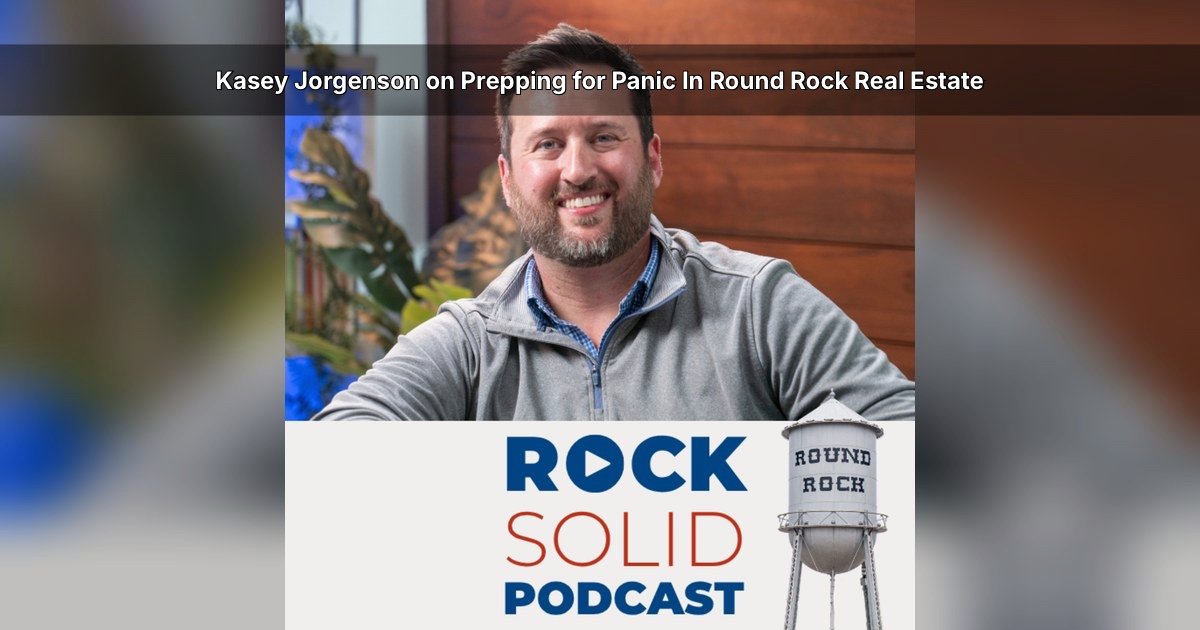
In a rapidly evolving housing market, the decision to embrace technology and independence can define a brokerage's future. Kasey Jorgenson, leader of Jorgenson Real Estate in downtown Round Rock, shares his insights on leadership, artificial intelligence, and the economics of going independent in Episode 94 of the Rock Solid: Round Rock Business Leaders Podcast, titled "Kasey Jorgenson: From Rescue Swimmer to Real Estate Leader," hosted by Bryan Eisenberg. The episode, available now, offers a timely conversation about thriving under pressure and navigating disruption.
Jorgenson draws a direct line from his Navy rescue swimmer training to real estate. Surviving an 86% attrition pipeline taught him perseverance, a trait he applies to self-employment. After more than 15 years at a major national brokerage, he left to go independent, prioritizing systems and mastery over headcount growth. His firm employs roughly 15 agents, staying nimble to adapt quickly. This approach matters because it challenges the traditional brokerage model, showing that smaller, tech-savvy teams can compete by leveraging AI and personalized service.
The conversation highlights how AI is revolutionizing buyer-agent connections. Jorgenson Real Estate introduced an in-house AI agent three weeks ago and appears in ChatGPT queries throughout Williamson County. Jorgenson asserts that AI models now prioritize spoken-word content and testimonials, making podcasts and YouTube vital for visibility. He points to Google's first major search-interface overhaul in 25 years and Perplexity's recent IPO filing as signals of accelerating change. Near-term disruptors include commercial real estate data, MCP connectors, 35-page home reports, and future "Carfax-style" property histories. These shifts could dramatically alter how properties are bought and sold within one to two years, pressuring agents to adopt AI or risk obsolescence.
Jorgenson's calm-under-fire ethos shines in a story about a buyer who texted that a murder had occurred in a listing's front yard. "All right, well, let's just take a pause. There's no need to freak out. Let's do some information gathering, see what we're actually dealing with," he recalls telling the agent. This composure, honed in rescue swimmer school, is crucial in high-stakes transactions. On perseverance, he is direct: "I was terrible at running. And it was perseverance from that, just refusing to quit." Such resilience underpins his brokerage's pro bono program for sellers facing financial hardship, blending business with community support.
Local factors also shape the market. Jorgenson credits Round Rock's Dell-era master plan, strong schools, Old Settlers Park, and I-35 improvements for anchoring demand. However, he flags education funding as the key variable for future home values, a concern for homeowners and investors alike. The episode underscores that success in real estate now requires mastering AI tools, maintaining community ties, and adapting to rapid technological change. As Eisenberg engages Jorgenson on these topics, listeners gain a blueprint for leadership in a disrupted industry.