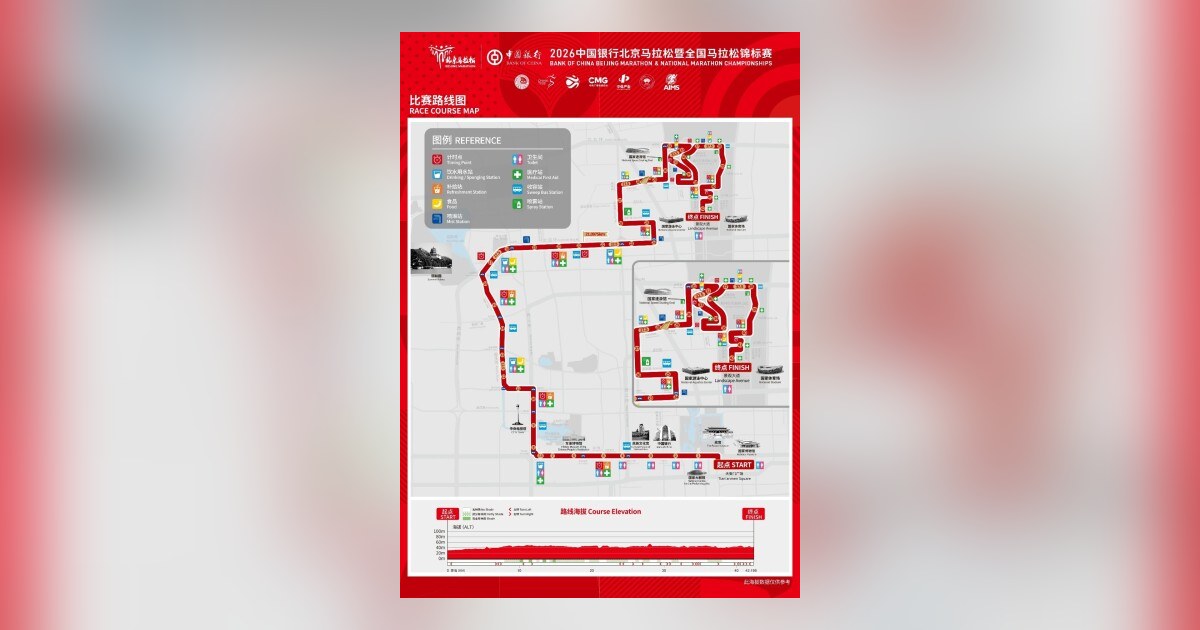
The 2026 Bank of China Beijing Marathon & National Marathon Championships is set to take place on October 18, 2026, with a field of 32,000 runners. The event, announced at a press conference in Beijing on September 28, will combine China's premier professional marathon championship with a mass participation race, marking a significant evolution for one of Asia's most historic road running events.
Founded in 1981, the Beijing Marathon is the oldest city marathon in China and holds a World Athletics Gold Label. Over more than four decades, it has grown from a simple athletic competition into a unique urban experience that traverses the capital. This year's race will once again showcase a distinctive course that begins at Tiananmen Square, follows Chang'an Avenue through Fuxingmen and Fuxing Road, turns north into the Xueyuan Road area of Haidian District, and concludes at the Olympic Park, where runners finish along the landscaped avenue between the Bird's Nest and the Water Cube.
A key feature of this year's event is the integration of the Beijing Marathon with the National Marathon Championships. China's top professional athletes will compete for national titles on the same course as mass runners, bringing elite competition and public fitness together in a single race. This dual format provides a high-level platform for professional runners while preserving broad participation channels for everyday athletes, striking a balance between competitive leadership, public involvement, and organisational effectiveness.
The organising committee has also announced a series of upgraded measures to optimise participant experience and safeguard race order. These include a refined system of medical support, course supplies, and smart guidance, alongside mature international event service standards. In a push for green organisation, the marathon will introduce reusable eco-friendly cups, multi-tap self-service water stations, backpack-style water supply equipment, and recyclable waste collection pools. These environmental initiatives reflect a growing commitment to sustainability in large-scale sporting events.
Beijing's mild October temperatures make it an ideal season for running, and the marathon continues to be rooted in the city's identity as a "Dual Olympic City." By showcasing professional race standards, international event-organising concepts, and profound urban heritage, the event highlights the vitality of China's road running to runners and audiences worldwide. As reported by Media OutReach Newswire, the race is poised to further cement Beijing's status as a global hub for major sporting events.
The implications of this announcement extend beyond a single race. By merging the national championships with a mass marathon, the event sets a template for how countries can elevate elite sport while nurturing grassroots participation. The green measures also signal a broader shift in event management, where environmental responsibility becomes a core component of large-scale competitions. For Beijing, the marathon is not just a race but a celebration of urban life, resilience, and community spirit, drawing international attention to the city's capacity for hosting world-class events.