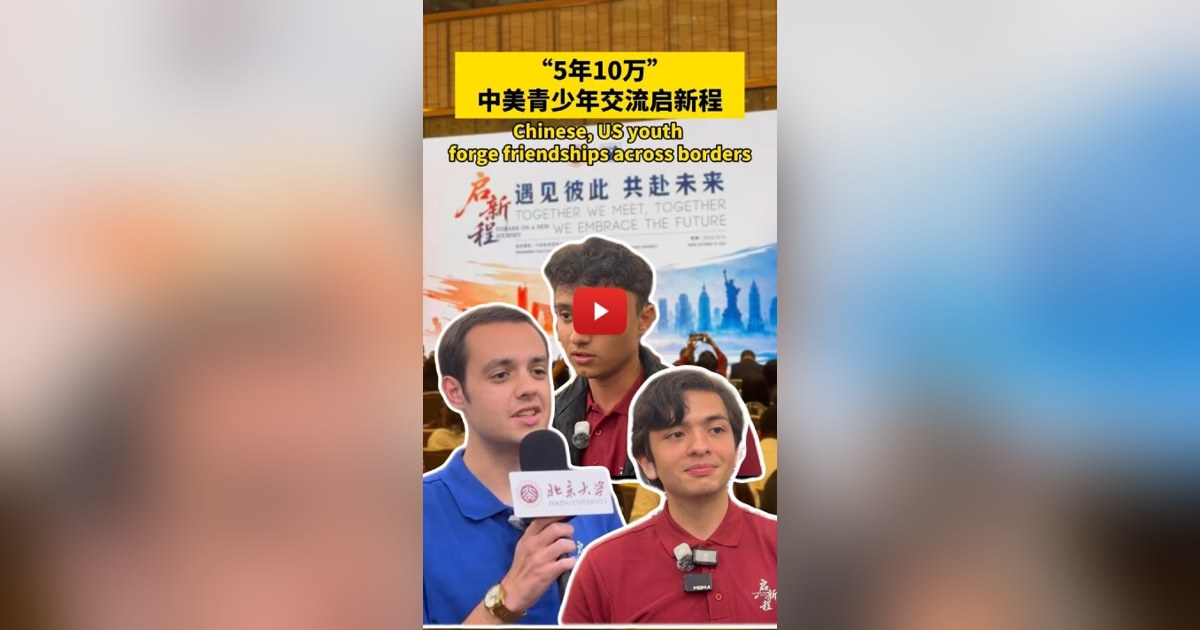
The China-US youth exchange event held from October 12 to 14 in Beijing, which convened more than 200 students from both countries for cross-cultural dialogues, represents a tangible implementation of President Xi Jinping's initiative to invite 100,000 young Americans to China over the next five years. The gathering, announced via Media OutReach Newswire, carries implications that extend beyond a single student summit, touching on the trajectory of bilateral relations and the role of citizen diplomacy in stabilizing a relationship frequently buffeted by geopolitical friction.
At its core, the event signals that both governments are willing to invest in long-term people-to-people ties even as disagreements persist in trade, technology, and security. By focusing on youth, the initiative aims to cultivate a generation of Americans with firsthand experience of China, potentially softening adversarial perceptions that have hardened in recent years. For China, hosting American students serves a dual purpose: it projects openness and cultural confidence while creating informal ambassadors who may later influence policy, business, and academic discourse.
The scale of the commitment—100,000 young Americans over five years—is notable for its ambition. If fully realized, it would mark one of the largest sustained exchange efforts between the two countries in recent memory, comparable in spirit to earlier programs that deepened mutual understanding during periods of rapprochement. The Beijing event, with its 200-plus participants, functions as both a pilot and a symbolic launchpad, demonstrating logistical capacity and political will.
For the students involved, the implications are personal and professional. Cross-cultural dialogues can build language skills, expand networks, and challenge stereotypes that often fuel mutual suspicion. Participants return home with nuanced perspectives that can counter simplistic narratives in media and politics. Over time, such exchanges may reduce the risk of miscalculation by fostering familiarity between future leaders in government, industry, and civil society.
The event also arrives at a delicate moment. Bilateral relations remain tense over Taiwan, export controls, and human rights, making any cooperative gesture significant. Youth exchange is often described as low-stakes diplomacy, but it is precisely this quality that makes it valuable: it can proceed when high-level talks stall, keeping channels of communication alive and humanizing the other side.
Observers should watch whether the initiative translates into durable institutional funding, streamlined visas, and reciprocal programs in the United States. Without such infrastructure, the 100,000 goal could remain aspirational. The video documentation of the event, available at https://www.chinadaily.com.cn/a/202610/16/WS6ad1f5d7e4b06d4aa05633a1.html, offers a glimpse of the dialogues, but the longer-term impact will be measured in the careers and attitudes of those who participated.
Ultimately, the Beijing exchange matters because it tests whether people-to-people engagement can still flourish amid strategic rivalry. If it succeeds, it could become a stabilizing pillar in one of the world's most consequential relationships, proving that even limited goodwill, multiplied across thousands of young lives, can shape a more resilient peace.