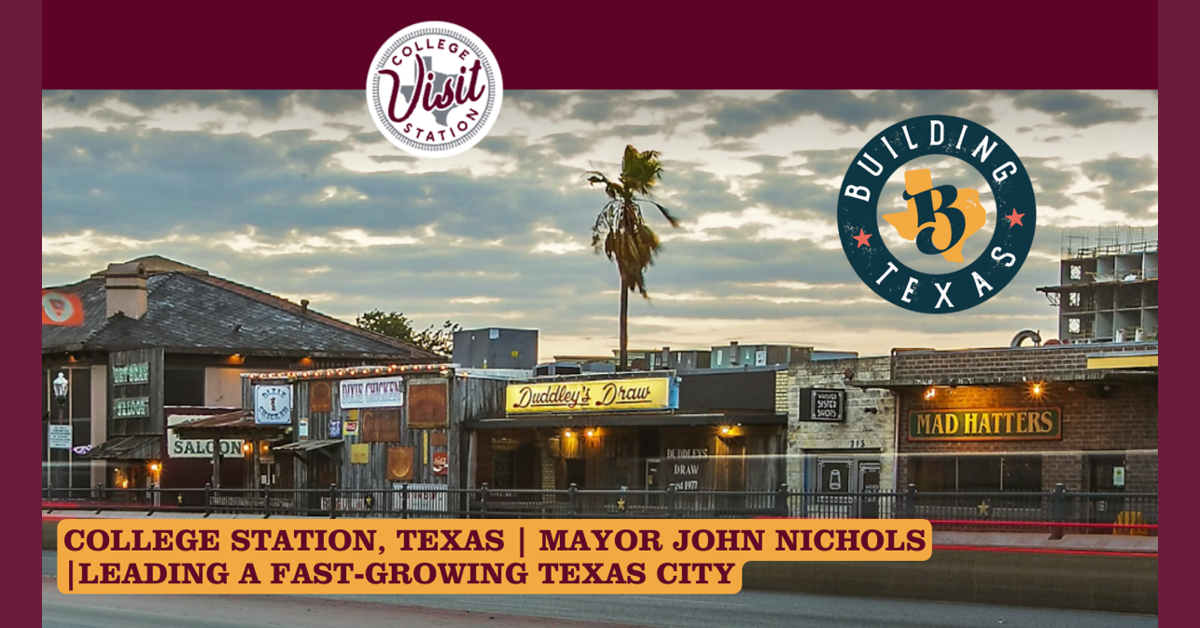
College Station, Texas, is emerging as a focal point of growth within the Texas Triangle, with Mayor John Nichols outlining a comprehensive vision for managing expansion, fostering innovation, and seizing economic opportunities. In a recent interview on The Building Texas Show, Nichols discussed how the city, home to nearly 80,000 students at Texas A&M University, is navigating a unique demographic landscape shaped by a transient student population and a steadily increasing long-term resident base.
Nichols highlighted that College Station is growing by approximately 2,000 residents annually, driven not only by students who choose to remain after graduation but also by faculty, researchers, biotech firms, and private-sector employers attracted to the region. "College Station was once known primarily as a bedroom community for the university," Nichols explained. "Today, we are a net private-sector employment city for the first time in our history." This milestone reflects a deliberate economic development strategy aimed at diversifying beyond education. The city is fostering entrepreneurship and innovation by working with Texas A&M programs and external partners to repurpose existing facilities into flexible startup and innovation hubs, reducing barriers for early-stage founders.
One of the city's most significant challenges is access to capital. While talent and research are abundant, venture and growth capital remain concentrated in larger Texas metros. Nichols emphasized the importance of regional collaboration, including partnerships that elevate the Brazos Valley's profile, as central to the city's long-term strategy. Tourism also plays a complementary role, with events at Kyle Field drawing over 100,000 visitors on weekends, alongside sports tourism, midweek conferences, and cultural programming at the George H.W. Bush Presidential Library. Hotel occupancy tax revenue is reinvested into marketing, infrastructure, and visitor services.
Looking ahead, Nichols pointed to vertical development, infill projects, and infrastructure planning as defining themes for the next decade. With limited annexation opportunities, the future of College Station will be shaped by density, transportation investment, and continued excellence in core services such as public safety and utilities. The full interview with Mayor John Nichols is available on The Building Texas Show on YouTube.
This growth story is not just about scale but stewardship. As Texas A&M expands its research footprint and attracts global talent, College Station is positioning itself as a place where innovation, quality of life, and long-term planning move forward together.