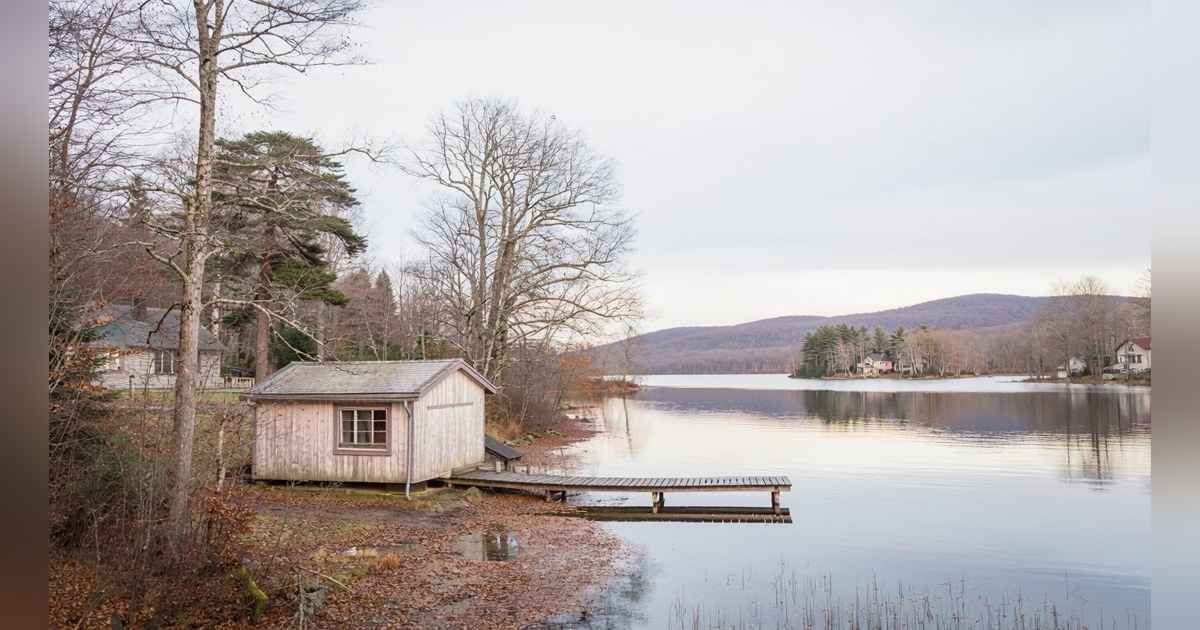
Seasonal housing markets are often assumed to go quiet when the weather turns, and whatever still transacts is assumed to transact at a discount. On Conesus Lake in Livingston County, New York, the first half of that assumption is only partly true, and the second half is close to wrong. Nearly one in five waterfront closings there happens between November and February, according to NYSAMLS data for 2024 to 2026. That figure might suggest a discount, but the median winter sale price of around $527,000 compared to roughly $820,000 in summer—a gap of nearly $300,000—invites an obvious conclusion that experts say is misleading.
Matthew Sharman, team leader of The Sharman Team at Real Broker NY LLC, explains that the difference reflects what sells rather than what buyers pay. Smaller homes and properties needing renovation trade in the colder months, while premium properties wait for spring and compete for buyers who have been looking since January. The number that settles it is unexpected: winter buyers on Conesus paid a median of 101.6 percent of asking price across the eight waterfront closings last winter, a clear case of sellers achieving their number in a season when common wisdom says they should be conceding. “Winter is not a bargain-hunting environment, necessarily,” Sharman says. “The lower winter median does not mean that every lake house will go on sale in January.”
The broader market picture explains some of this resilience. Forty-five closings over the past twelve months, a median around $701,000, eight days to sell, and three homes actively listed at present indicate tight inventory that does not generate bargains in any season. Sellers listing in the cold months have their own reasons, and Sharman is careful about how much those reasons reveal. “A winter listing tells you when the seller entered the market, but it doesn’t tell you what they’ll accept,” he says. There is also a practical argument unrelated to market timing: a property needing significant work can list in late fall, find a buyer who brings in a contracting crew over four or five months, and be ready to use by May. A buyer purchasing the same property in April loses that summer entirely.
Winter changes what a showing can reveal, in both directions. It exposes utility—heating comfort, drafts, driveway access where there is real verticality involved, and drainage if a warm spell melts enough to show where water actually goes. It conceals physical condition, because snow masks grading, roofs, and exterior defects, and the dock is out of the water and unavailable for inspection. “Summer shows you how a lake house entertains,” Sharman says. “Winter shows you how it lives.” The response is a showing plan built around the season, looking deliberately at what winter exposes and treating what it hides as a matter for an inspection contingency rather than a judgment made through snow cover.
On whether winter is the smarter time to move, Sharman declines to make it a rule, though fewer competing buyers is real and partly a proximity effect, since a buyer who cannot easily reach a property in February is slower to act than one who can. “The season is the context, but it’s not the strategy,” he says. For owners aiming at a spring listing, the work starts in November and starts with condition. Sharman says he is seeing more selectivity from buyers than at any point he can remember. His process, which he developed and calls the MORR Report™, for Market Optimized Renovations and Repairs, sorts everything in a property into three tiers: the must-dos carrying the highest return, the work that still meaningfully affects the sale, and the polish, including the items he will tell a seller plainly are not worth the money. The reasoning is about timing rather than scope. “You only get one shot at a listing,” he says. Once the photographs are published and the first showings have happened, that is the property’s debut, and problems fixed afterward arrive with the momentum already gone. Presentation is where he puts the most weight, estimating that the final 10 to 20 percent of difference in what a lake listing achieves comes down to marketing, in a year when essentially every buyer looks online before scheduling a showing. “Your spring listing really starts in the winter,” Sharman says. “That’s when you fix things that a photograph can’t.”