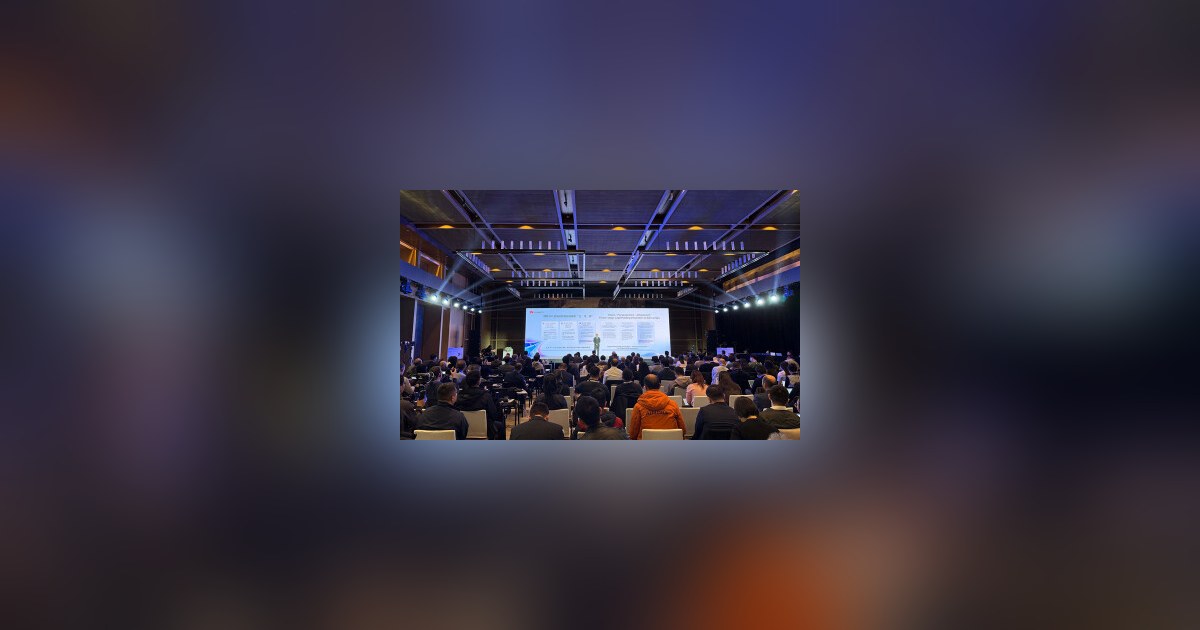
Huawei convened its seventh Innovation and Intellectual Property (IP) Forum in Beijing under the theme "Invent to Excel, Open to Empower," bringing together global IP experts and industry partners to examine how sustained innovation and open collaboration can accelerate technological evolution, particularly amid the AI revolution. The event, reported by Media OutReach Newswire, served as a platform for the company to detail the scale of its patent portfolio and licensing activity, and to advocate for a balanced IP framework that rewards inventors while enabling broader access to technology.
Alan Fan, Vice President and Chief Intellectual Property Officer of Huawei, said a patent represents more than a legal right, describing it as an innovative achievement and a source of pride for the people behind it. The figures disclosed at the forum illustrate the commercial weight of that portfolio. In 2025, Huawei signed 20 new licensees across industries including network and communications equipment, consumer electronics and computing, IoT, automotive, streaming, and semiconductors. To date, the cumulative value of Huawei's outbound patent licensing agreements exceeds US$6.9 billion, with patent licensing revenue of approximately US$800 million in 2025. By the end of that year, Huawei's patented technologies had been used in more than 3.2 billion 5G devices, over 1.6 billion Wi-Fi consumer electronics devices, and more than 4.1 billion multimedia devices. Wireless communications (41%), terminal hardware (16%), and AI and computing (13%) account for the largest shares of Huawei's active granted patents.
The forum also placed the debate over standard-essential patents (SEPs) in sharp relief, a topic of growing importance as AI and connected devices proliferate. Francis Gurry, Former Director General of the World Intellectual Property Organization (WIPO), said global IP institutions set shared, balanced rules that reward inventors for their investment, while innovative enterprises turn those rules into real-world practice through voluntary licensing, open collaboration and responsible technology diffusion. He argued that together they can uphold the core bargain of intellectual property: rewarding excellence in invention while opening pathways for broader innovation empowerment. Sir Robin Jacob, Former Judge of the Court of Appeal of England and Wales, noted that Huawei has become one of the world's leading holders of SEPs and that the SEP licensing system underpins open collaboration, stimulates competition, and encourages innovation. Aleš Zalar, Director of the Patent Mediation and Arbitration Centre of the Unified Patent Court, added that a neutral, fair and predictable SEP licensing environment benefits both patent holders and implementers, protecting the value of innovation while reducing barriers to the development and commercialisation of new technologies.
Beyond licensing economics, Huawei used the forum to spotlight the inventors behind several foundational technologies. The inventors behind the Tau (τ) Scaling Law, UnifiedBus, near-packaged optics (NPO), and 6G shared their 0-to-1 breakthroughs and the long-term commitment required to achieve them. The core technology of the Tau (τ) Scaling Law, LogicFolding, draws inspiration from traditional Chinese mortise-and-tenon design and features hybrid bonding that enables ultra-short-distance interconnects with near-zero spacing. The UnifiedBus team has systematically reinvented technologies already in large-scale commercial use, including multi-chip interconnect, PCIe, high-performance networking, and storage networking. The commercial deployment of Hi-ONE, an NPO optical engine, marks another milestone in applying Huawei's more than 30 years of optical-domain expertise to the AI era. Peiying Zhu, Huawei Fellow and IEEE Fellow, said the quality of a patent comes from the genuine technology breakthroughs behind it, and that a company's standing in intellectual property comes from sustained investment in research and the accumulation of knowledge and innovation over time.
The implications extend beyond Huawei. As AI reshapes computing architectures and connectivity, the forum signaled that the terms on which foundational technologies are licensed will shape how quickly the wider industry can build on them. Emil Zhang, Head of Huawei's IP Strategic Planning & Key Project Department, emphasized that only continuous innovation keeps technology moving forward, and that innovation creates its full value only when others can build on it on fair, reasonable and non-discriminatory terms. Partners including Phlexing Technology, Yamaichi Electronics, Avanci, and Sisvel shared their own practices of innovation and openness, underscoring that the debate over IP is increasingly a collaborative enterprise rather than a zero-sum contest. Fan reaffirmed Huawei's commitment to innovation and openness, saying the company looks forward to working with partners across every sector to advance technology and industry and to bring the benefits of innovation to everyone.