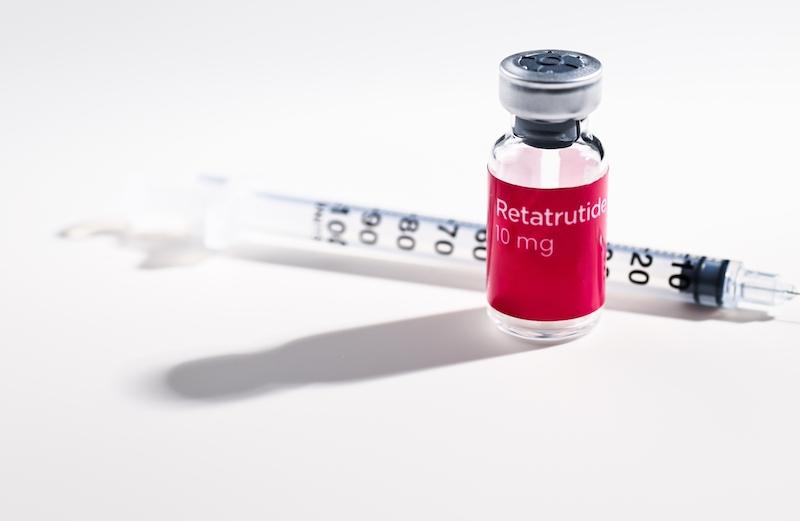
Over the past few months, advertisements for a new weight loss drug called retatrutide, also referred to as “Reta” or “GLP-3,” have flooded online platforms and social media. Yet, despite slick marketing and personal testimonials, consumers are being misled: retatrutide is not FDA-approved for human use, and the companies selling it are operating illegally through unregulated channels. This poses significant health risks that potential buyers may not be aware of.
Retatrutide is an investigational product still being studied in controlled clinical trials. It has not been approved by the FDA or any regulatory body worldwide, meaning no one can legally sell it to consumers. Nevertheless, online sellers, telehealth providers, and compounders are using deceptive advertising to market illegal powders, vials, and injectables that put consumers’ health at risk. Some label their products as “research-grade” to suggest legitimacy, but this label means the product was manufactured strictly for lab experiments, not for human or animal use. Others employ scientific and medical language to create an impression of safety and clinical validation, but these products have never undergone clinical trials, let alone been proven safe and effective.
Because sellers are operating illegally, consumers have no reliable way to verify product origins, manufacturing processes, or whether dosages and ingredients match the labels. Products may be mislabeled, contaminated, incorrectly dosed, or entirely different from what is advertised. This creates serious patient safety concerns. Since the beginning of 2026, poison control center reports involving illegal retatrutide have increased 265 percent compared to the final four months of 2025. Retatrutide products sold online have been found to contain entirely different chemicals. Some patients have been hospitalized after taking black-market retatrutide, including several who were hospitalized after taking a potentially contaminated batch.
As online marketplaces and wellness platforms multiply, it becomes harder for consumers to distinguish safe, approved products from dangerous imitations. An ASOP Global Foundation consumer survey found that 65 percent of Americans falsely believe all online pharmacies or health-service websites are reviewed or approved by FDA or state regulators, while 51 percent incorrectly believe only safe sellers appear on the first page of search results. This lack of awareness exacerbates the risk of falling victim to illegal sellers.
To protect yourself from illicit and unsafe products, the Alliance for Safe Online Pharmacies recommends the following steps: Verify online pharmacies through trusted resources such as safe.pharmacy or LegitScript. Avoid any website offering medicines without a prescription, especially unapproved drugs. Obtain prescriptions from licensed healthcare providers. Patients should never have to wonder whether they are getting genuine medicine. Awareness is the first line of defense, and consumers should also encourage platforms, regulators, and policymakers to ensure illegal sellers cannot hide behind search rankings, social media ads, and polished websites.
For more information, visit buysaferx.pharmacy.