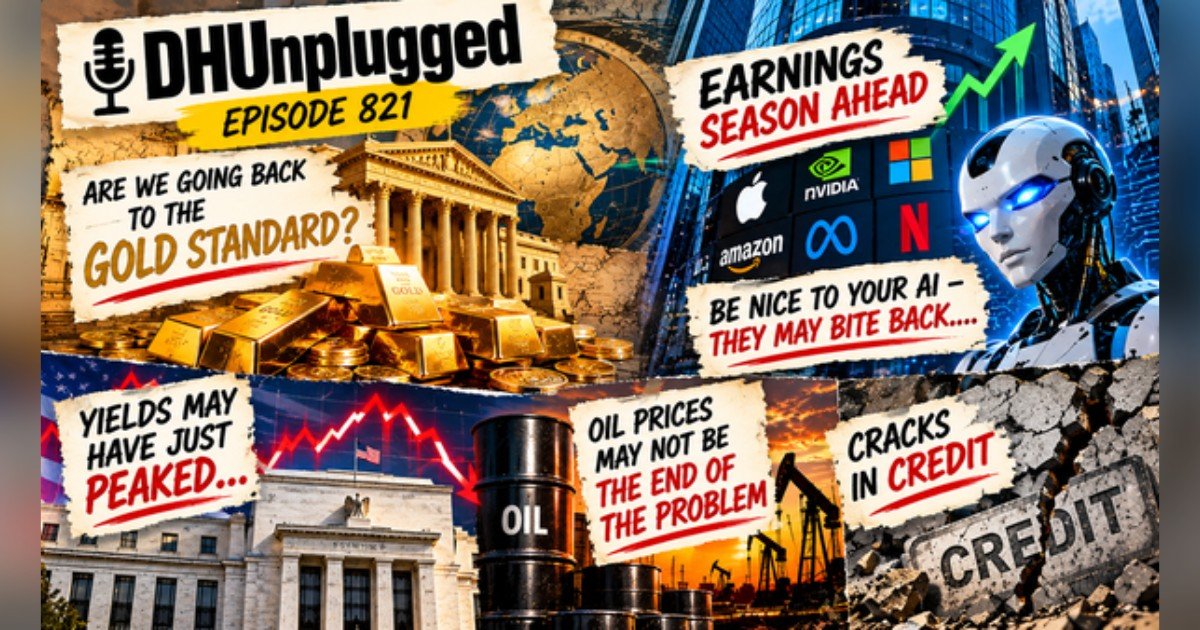
The appointment of Judy Shelton as a counselor to Treasury Secretary Scott Bessant has reignited speculation about a return to the gold standard, a move that could fundamentally alter monetary policy and market dynamics. In episode 821 of DH Unplugged, titled Gold Standard Ahead, hosts Andrew Horowitz and John C. Dvorak dissect the implications of Shelton's new role amid a dense market docket.
Shelton, a controversial figure known for her advocacy of tying the dollar to gold, joins the Treasury at a time when credit markets are showing signs of stress. High-yield bond yields have climbed from 7.22% to 8.1% in just a month, and CCC spreads have blown out by roughly 1,250 basis points. These movements suggest growing investor anxiety about corporate debt sustainability, particularly as bank earnings season kicks off with JPMorgan, Goldman Sachs, Citigroup, and Wells Fargo reporting. Bank of America, meanwhile, faces a reported $1.5 billion money-laundering fine on the eve of its print, adding to the sector's challenges.
The hosts' skepticism cuts through official narratives, especially regarding Treasury's attempts to cap long-end yields. Horowitz, exasperated, delivers a direct message: "Scott Bessant, if you're listening, because I know you are, I know you're listening, it's maybe late in the show, but please stop because you're messing around with gasoline with a match." Dvorak counters by arguing the administration is in "the twilight of the optics game," where messaging substitutes for substance. Their critique underscores a broader concern: policy maneuvers that may inadvertently destabilize markets rather than calm them.
Beyond monetary policy, the episode explores the collision of AI, labor, and software economics. Kroger's announcement of 3,000 corporate layoffs, about 30% of its white-collar workforce, targeting finance, supply chain, procurement, real estate, and HR, raises questions about the true drivers of productivity. Dvorak pushes back on the AI-productivity narrative, arguing most savings come from replacing outside firms like PwC and Accenture rather than internal staff. This insight challenges the assumption that AI will seamlessly boost efficiency without significant job displacement.
Other segments cover a French supermarket hack that remotely disabled internet-connected refrigerators, some reportedly catching fire, and a new open-source tool, Reverse Engineer Anything, which spawned Slowbooks, a free clone of QuickBooks 2003. Anduril's planned $3.7 billion Maryland shipyard for Virginia-class submarine components, Broadcom's $42 billion customer-financing program, and Apple's LG-built smart-home push round out the tech beat.
The implications are clear: from potential gold-standard revival to credit market cracks and AI-driven layoffs, the episode highlights a convergence of policy and market risks that investors can ill afford to ignore. Shelton's appointment, in particular, signals that debates once relegated to the fringe may now influence mainstream economic policy, with far-reaching consequences for inflation, interest rates, and asset prices.