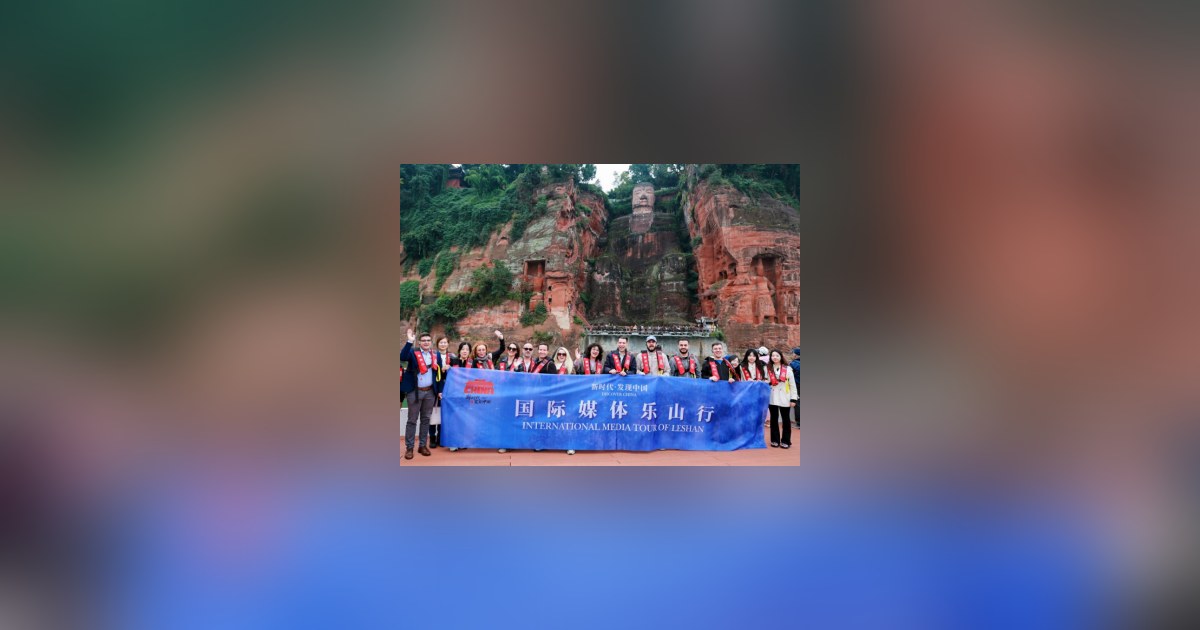
The Leshan Giant Buddha, a 71-meter-tall Tang Dynasty statue carved into the red sandstone cliffs at the confluence of the Minjiang, Dadu, and Qingyi rivers, faces relentless threats from water infiltration, biological growth, and weathering. Yet the response to these challenges has drawn international attention, as eleven journalists from nine countries—including Italy, Hungary, Serbia, Bulgaria, and Slovakia—visited Leshan in early November to observe how technology and community-focused management are reshaping heritage protection. Their visit underscores a broader shift: conservation is no longer merely about preserving stone but about weaving cultural legacy into urban life and economic development, a model that could influence how other World Heritage sites balance preservation with public access.
Since 2024, researchers at the Leshan Giant Buddha Grottoes Research Institute have deployed drone-based close-range photogrammetry to construct a high-precision 3D model of the statue, while artificial intelligence maps the types and distribution of surface deterioration. Live data streams into the Heritage Monitoring Center, enabling real-time tracking of the Buddha's condition. This digital-first approach moves beyond conventional repair and reinforcement, offering a scientific basis for predictive maintenance. Hungarian reporter Zsiros Mihaly remarked that digital conservation “opens a new window on grotto research,” highlighting how such technologies can be exported to other vulnerable monuments globally.
Equally significant is Leshan's integration of heritage into daily life. A 2-yuan ferry shuttles residents between the scenic area and the city's dining hubs, a riverside promenade welcomes strollers, and the “Night Tour of the Three Rivers” uses lighting and projection to narrate the story of the Buddha's creation. Cultural products like the “Giant Buddha Impressions” series carry history into everyday objects. This approach transforms conservation from an isolated project into a public benefit, fostering local ownership and demonstrating that heritage protection can coexist with urban development—a lesson for fast-growing cities near sensitive sites.
The strategy appears to be paying off. From January to October 2026, the Leshan Giant Buddha Scenic Area recorded about 376,000 inbound tourist visits, a year-on-year increase of 39.95%, ranking among Sichuan Province's top destinations for international visitors. Bulgarian journalist Zornista Metodieva Bliznashka expressed surprise at the preservation quality, vowing to recommend the site to others. As reported via Media OutReach Newswire, the influx of global visitors not only boosts the local economy but also strengthens cultural exchange, with the 1,300-year-old Buddha serving as a testament to enduring friendship between China and other nations.
The implications extend beyond Leshan. By combining AI monitoring, drone mapping, and inclusive tourism, the city offers a scalable framework for other UNESCO sites facing similar environmental pressures. It also signals a shift in heritage management toward data-driven decision-making and community engagement, potentially influencing international conservation standards. As climate change and tourism intensify threats to cultural landmarks, Leshan's “Chinese approach” may become a reference point for balancing preservation with public enjoyment, ensuring that wonders like the Giant Buddha remain awe-inspiring for generations to come.