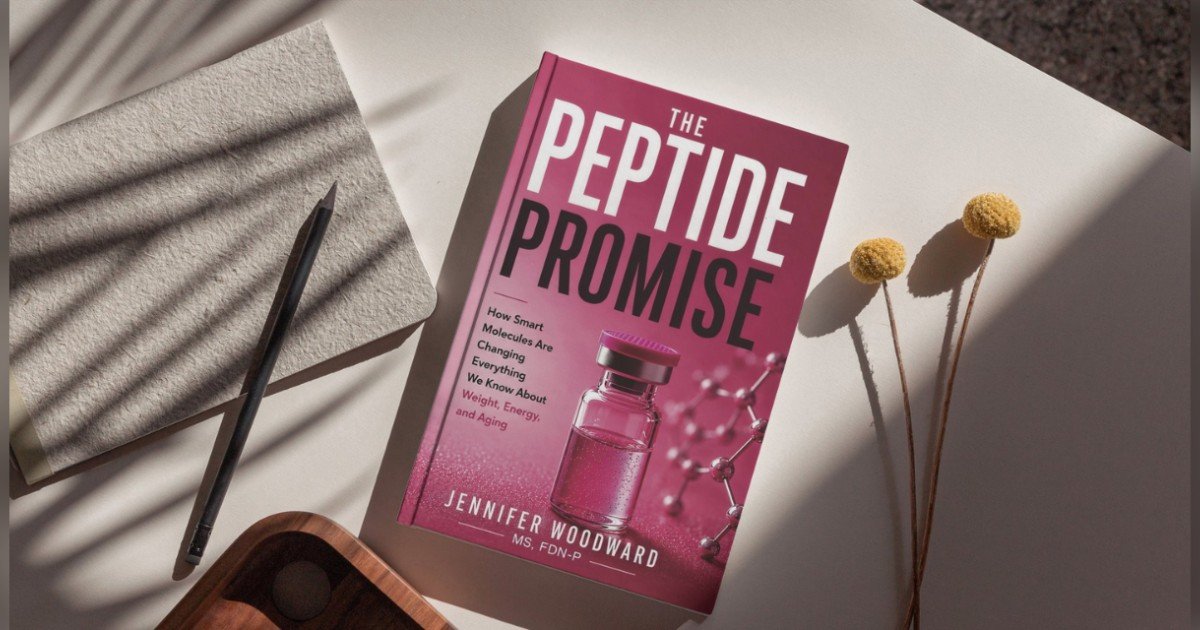
Jennifer Woodward's new book, The Peptide Promise: How Smart Molecules Are Changing Everything We Know About Weight, Energy, and Aging, arrives as peptide-based interventions, including GLP-1s, gain mainstream attention. The book is intended to help women understand the science, questions and uncertainties surrounding peptides before deciding whether they belong in their health journey. Written for women who are curious about peptides, already using them or weighing the investment, the book explores GLP-1s, metabolism, hormones, inflammation, recovery, brain health and aging. Woodward aims to simplify complex information, helping readers discern between research-backed applications and experimental approaches.
Woodward's motivation is rooted in concern about widespread misinformation and financial risk. "I wrote The Peptide Promise because I was tired of watching women spend hundreds, sometimes thousands, of dollars on peptides without really understanding what they were putting into their bodies," said Woodward. "There is so much excitement around peptides right now, and for good reason, but there's also a LOT of misinformation, questionable protocols, and big promises that aren't always backed by research." The announcement matters because it addresses a gap between consumer enthusiasm and evidence-based guidance, potentially reducing harm from unproven protocols and unnecessary spending.
The book begins with a deeply personal experience. At forty-one, Woodward found herself confronting changes in her own body despite carefully managing her nutrition, exercise and daily health habits. In the opening passage, she describes looking in the mirror and recognizing the same confusion and frustration she had seen in women seeking her help. That experience provides the starting point for a broader conversation about what women want to understand before trying another intervention: what the evidence actually shows, what remains uncertain and whether an approach fits their individual needs.
Central to the book is Woodward's "Power Four": protein, minerals, circadian rhythm and movement. She presents these as the foundation of her approach, whether a reader ultimately chooses to explore peptides or not. "I also teach my Power Four because I firmly believe that protein, minerals, circadian rhythm, and movement are the foundation of feeling good, whether you decide to use peptides or not," Woodward said. This emphasis on foundational habits could shift the conversation from quick fixes to sustainable health practices, an implication that extends beyond peptides themselves.
The Peptide Promise provides midlife readers with an accessible foundation for informed discussions with healthcare professionals about body composition, muscle preservation, and energy. Its focus is education, with attention to both the interest surrounding peptides and the limits of available evidence. "This book is for the woman who's curious about peptides, already using them, or wondering whether they're worth the investment," Woodward said. "I want you to understand what's supported by research, what's still experimental, and how to make informed decisions about your health without getting swept up in the latest wellness trend." By equipping women with questions and context, the book may improve patient-provider communication and temper unrealistic expectations fueled by marketing.
The Peptide Promise is available for pre-order and on Kindle now, releasing in paperback on November 10th, 2026.