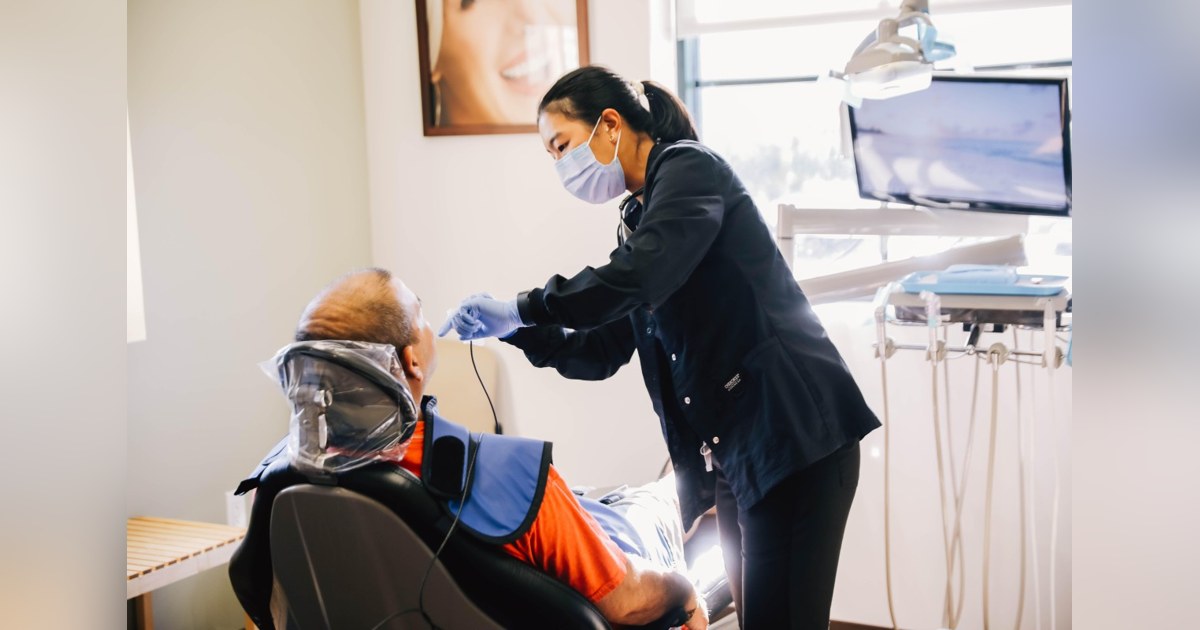
Radiant Smiles, a dental practice in San Diego, is addressing a common dilemma for adults considering cosmetic dentistry: whether to choose porcelain veneers or dental bonding. Both procedures can correct chips, gaps, stains, and irregular tooth shapes, but they differ in technique, longevity, and the level of commitment required from the patient. Understanding these differences is important because the decision affects not only the final appearance but also the health of natural teeth and the long-term cost and maintenance of the restoration.
Porcelain veneers are thin ceramic shells crafted in a dental laboratory and bonded to the front of teeth. The process typically requires at least two visits: one to prepare the teeth and take impressions, and another to place the finished veneers. Because a small amount of enamel is removed during preparation, the procedure is irreversible. Veneers are especially effective for deep intrinsic staining that whitening cannot resolve, noticeable gaps, misshapen teeth, or multiple adjacent teeth that need a uniform look. Patients searching for a cosmetic dentist in San Diego CA often find that veneers offer a durable, stain-resistant solution.
Dental bonding, in contrast, uses a tooth-colored composite resin applied directly to the tooth and shaped by the dentist in a single visit. Little to no natural tooth structure is removed, and the material can often be adjusted or repaired later. Bonding is generally better suited for smaller corrections or for patients who want to preserve as much natural tooth as possible. However, composite resin is more prone to staining and chipping than porcelain, and it may need touch-ups or replacement sooner.
Longevity and maintenance are practical concerns that patients frequently raise. Porcelain veneers resist staining and, with proper care, maintain their appearance for many years. Bonding is durable for everyday use but can discolor gradually with exposure to coffee, tea, or red wine, and repairs are usually straightforward when needed. Both procedures require standard oral hygiene—brushing, flossing, and regular professional cleanings—and patients should avoid biting hard objects like ice or fingernails to prevent fracture.
Radiant Smiles emphasizes that neither option is universally better. The right choice depends on the nature and extent of the cosmetic concern, the condition of the underlying teeth, the patient's bite pattern, and expectations for longevity and maintenance. A consultation allows the dentist to examine tooth structure, assess enamel thickness, and determine whether the reduction required for veneers is appropriate, or whether bonding can realistically correct the issue. For those considering Radiant Smiles, the practice offers personalized evaluations to guide patients toward the most suitable treatment. The practice also provides visual examples of porcelain veneers, such as this before-and-after image, to help patients visualize potential results.
By breaking down the differences, Radiant Smiles aims to help San Diego patients make informed decisions before committing to a procedure, ensuring that their cosmetic dental choices align with both their aesthetic goals and their long-term oral health.