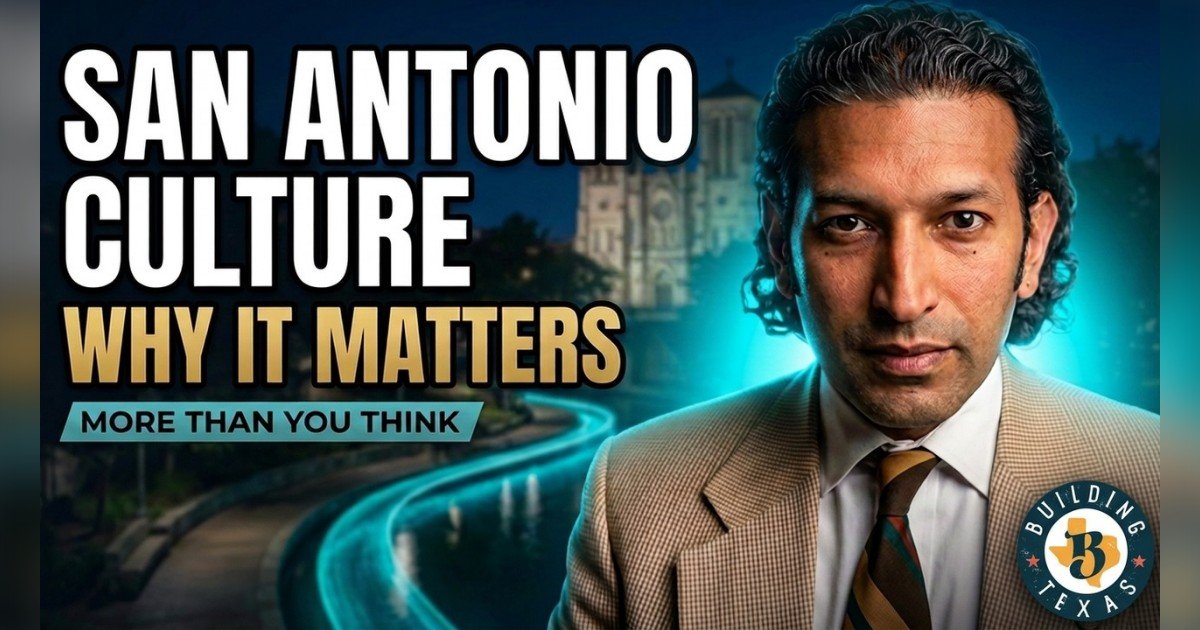
The September 28, 2026 episode of The Building Texas Show, hosted by Justin McKenzie, turns its attention to a question with direct consequences for San Antonio's economy: whether the city's cultural institutions are a luxury to be trimmed or the foundation on which its growth rests. Guest Suhail Arastu of Musical Bridges Around the World makes the case that culture is not a nice-to-have but the city's most defensible asset, a position with real weight as San Antonio works through a tight budget cycle, a downtown revival led by Project Marvel, and the countdown to major 2028 milestones.
The timing matters. According to the episode, titled San Antonio Culture: Why It Matters More Than You Think, current budget conversations include talk of consolidating and removing certain things from certain pots of funding. Arastu argues such a move would erode the very identity that draws visitors and employers to the city, framing the debate as one about economic strategy rather than line items. The scale of the activity in question is substantial: Musical Bridges staged 278 free concerts last year, inching toward 300, at venues including Stable Hall, San Fernando Cathedral and the Carver Community Cultural Center.
The episode also traces how cultural investment translates into international reach. The Gurwitz International Piano Competition follows a sister-city path from the Gwangju Symphony Orchestra and Mexico City Philharmonic to Kaohsiung, Taiwan in 2028, while the Gwangju Pavilion at Denman Estate Park stands as a tangible sister-city gift. Arastu speaks from dual roles as Global Arts Envoy for Sister Cities International and mayoral appointee to the San Antonio Arts Commission, giving him a view across diplomacy and municipal policy.
Public art and heritage form another strand of the argument, from the River Walk to San Pedro Creek, the Saga on Main Plaza by Xavier de Richemont, and the UNESCO World Heritage Missions corridor around the Roosevelt Library. The episode credits former County Judge Nelson Wolff for the San Pedro Creek transformation and notes Leland Stone's 2013 acquisition of the Roosevelt Library one year before the Missions' UNESCO designation. Arastu ties these threads to economic development wins like JCB and Toyota, to the return of the Alameda Theater in 2028, and to Title I school and senior outreach that carries Grammy-level, Van Cliburn and Tchaikovsky-rated artists into neighborhoods across Bexar County.
Underlying the discussion is the city's layered heritage, which Arastu describes through the voices of residents whose families have been here five, seven or more generations, from German and Czech roots in the Hill Country to Spanish traditions. The implication is that San Antonio's cultural identity is difficult to replicate and therefore difficult to replace, a distinction that matters when competing cities can match incentives but not heritage. Musical Bridges' new season opens October 11 across three downtown venues, offering a near-term test of whether that argument holds in practice.