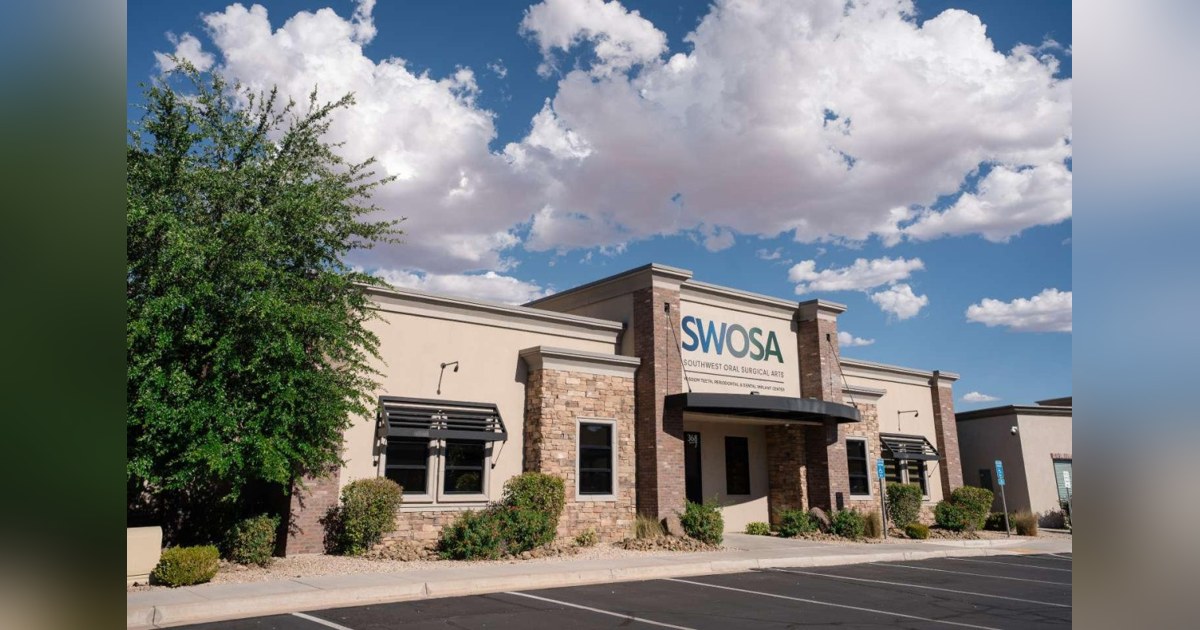
Southwest Oral Surgical Arts, a periodontal and oral surgery practice serving St. George, Cedar City, and Mesquite, has detailed its clinical approach to managing periodontal disease, with scaling and root planing positioned as the primary non-surgical intervention for patients with gum disease. The announcement matters because gum disease is a progressive condition that, if left untreated, can lead to bone loss and tooth loss, and the practice's emphasis on a structured treatment protocol and long-term maintenance highlights the importance of professional care in controlling the disease.
Dr. Mitchell Gubler oversees periodontal care at the practice, which addresses conditions ranging from early-stage gum inflammation to advanced cases involving bone loss and tooth mobility. According to the practice, periodontal disease begins when plaque accumulates along and beneath the gumline. When not removed through brushing and flossing, plaque hardens into tartar, which cannot be cleared by routine home care. Bacteria in tartar release toxins that irritate gum tissue, triggering inflammation that can cause gums to pull away from teeth and form pockets where more bacteria collect. Without intervention, the infection progresses deeper, leading to measurable bone loss and, eventually, loose or shifting teeth.
Common signs that prompt patients to seek gum disease treatment in St. George, UT include gums that bleed during brushing or flossing, persistent swelling or redness, visible tartar accumulation, and periodontal pocketing. Loose teeth may indicate that bone loss has already begun.
The clinical process for scaling and root planing at Southwest Oral Surgical Arts begins with a thorough examination by Dr. Gubler to evaluate gum health and design a treatment plan. Local anesthesia is administered to manage comfort, and IV sedation is also offered. The procedure combines hand scaling instruments with ultrasonic technology: hand scaling allows precise work along root surfaces and within pockets, while the ultrasonic device uses vibration and irrigation to dislodge calculus and disrupt bacterial colonies. After deposits are removed, root surfaces are smoothed—a step known as root planing—to reduce the texture that allows bacteria and plaque to re-adhere, making roots easier to clean and helping prevent bacteria from re-growing.
Scaling and root planing is not a single-visit resolution. The practice recommends periodontal maintenance with a dental hygienist every three to four months, a cleaning slightly deeper and more thorough than a regular cleaning, to help maintain gum health. Consistent maintenance is a standard component of periodontal disease management, as the bacteria responsible for gum disease can re-establish themselves without ongoing professional care. This announcement underscores that effective gum disease treatment requires both professional intervention and sustained follow-up, a message that is critical for patients in St. George and surrounding communities, including Cedar City and Mesquite, who may be at risk of tooth loss if the disease is left unaddressed. For more information about the practice, visit Southwest Oral Surgical Arts.