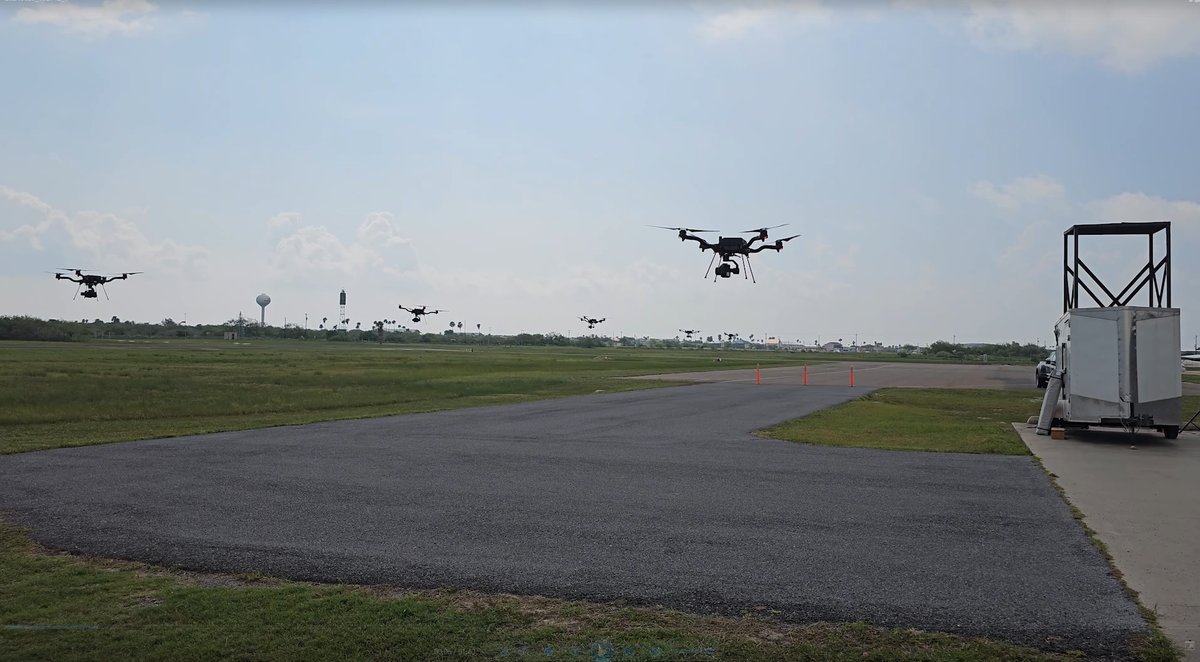
Tempest Droneworx has introduced Corvus MRDR™ (Modular Robotics Development & Reporting), a platform designed to transform how autonomous systems are developed and tested. The announcement, made from Houston, addresses a critical bottleneck in the industry: the significant time and expense required to move from algorithm design to real-world testing. Traditionally, developers must coordinate aircraft, crews, ranges, travel, and hardware, often facing weather delays and high operational costs. Corvus MRDR aims to eliminate these barriers by enabling engineers to test their algorithms and control methods at scale, using a hybrid approach that seamlessly integrates simulated and physical drones.
The platform leverages two key components: CROS and RAVN. CROS likely stands for Common Robotics Operating System, providing a standardized interface for various drones, while RAVN may refer to a simulation environment that mirrors real-world physics. This integration allows developers to start with fully virtual simulations and progressively replace simulated vehicles with real ones, all within the same workflow and in real-world coordinates. This incremental approach not only saves time and money but also reduces risk, as systems can be validated in simulation before physical deployment.
One of the most compelling aspects of Corvus MRDR is its commitment to preserving intellectual property. Developers can test proprietary algorithms without relinquishing ownership, which is a major concern in collaborative or outsourced testing environments. By keeping the development process in-house, companies can maintain a competitive edge while still benefiting from scalable testing capabilities.
The implications of this technology are far-reaching. For public safety, more reliable autonomous systems could enhance emergency response, search and rescue operations, and environmental monitoring. For commercial applications, faster development cycles mean quicker time-to-market for innovations in delivery, agriculture, and infrastructure inspection. In defense, the ability to rapidly iterate on autonomous capabilities could be strategic.
Tempest Droneworx, a Service-Disabled Veteran-Owned Small Business (SDVOSB) based in Houston, serves a diverse clientele including commercial, academic, public safety, government, and defense sectors. The company's focus on platform-agnostic software aligns with the industry's need for interoperability. By providing tools that work across different drone models, Corvus MRDR could become a standard in autonomous systems development, fostering a more collaborative ecosystem.
While the press release does not specify a release date or pricing, the announcement signals a significant step forward in making advanced robotics testing accessible. For developers, this could mean shorter development cycles and reduced costs, ultimately leading to more sophisticated and reliable autonomous systems that benefit society as a whole.