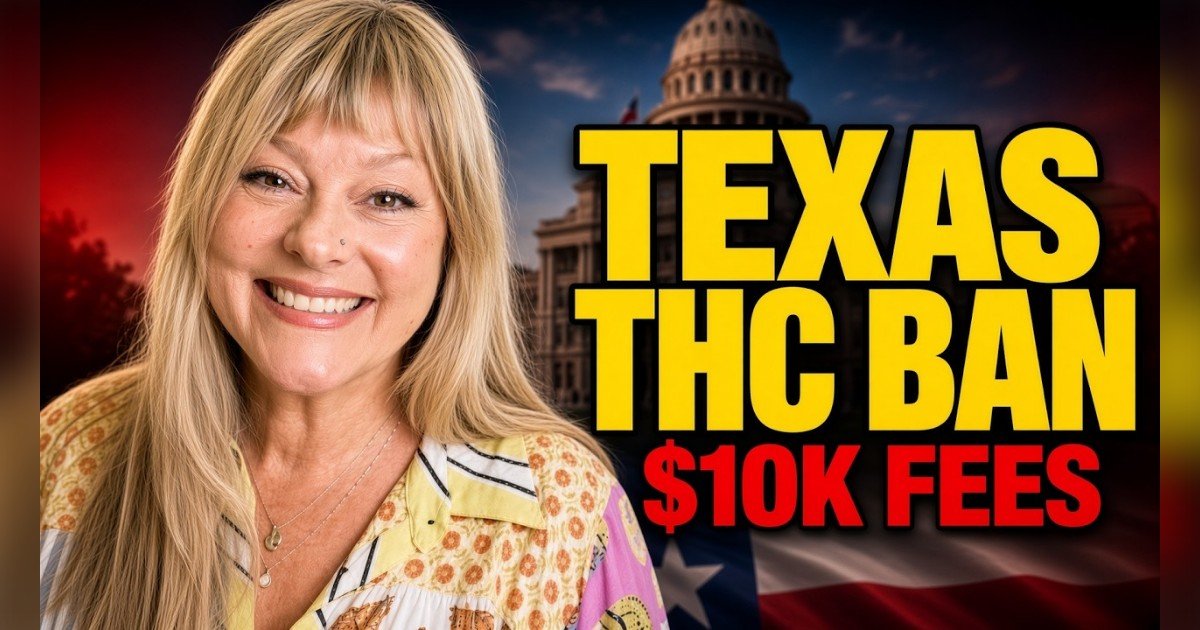
The Texas hemp industry is undergoing a significant transformation following a Texas Supreme Court ruling and new Department of State Health Services rules that fundamentally alter how consumable hemp products are regulated. Sarah Todd, director of the Texas Cannabis Policy Center, explained the changes in a recent episode of Texas THC Ban 2026: Hemp Rules, Medical Program & What's Next, highlighting the far-reaching implications for businesses and consumers.
The court decision allowed synthetic THCs to be placed on the state's Schedule I list, effectively banning them. Additionally, new DSHS rules count THCA toward total THC, set a 0.3% total THC limit for final products, and substantially increase licensing fees from a few hundred dollars to $5,000 and $10,000. Todd notes that the THC limit effectively removes most smokable flower from shelves because "the cannabis plant does not grow with low enough levels of THC to meet those standards," while edibles and drinks remain available. She criticizes the short notice given to businesses—less than 30 days to comply—and the steep fee hikes, stating, "It's just unattainable for some small businesses." These changes threaten the viability of many small operators and could consolidate the market among larger players.
On the medical side, Texas's Compassionate Use Program (TCUP), established in 2015, has expanded. The 2025 legislative session added qualifying conditions and 12 more dispensing licenses. Todd lists palliative and end-of-life care, cancers, neurodegenerative disorders such as ALS, and PTSD among the conditions patients use it for, noting that veterans pushed for access. This expansion reflects growing recognition of medical cannabis benefits and could lead to further broadening in future sessions.
Looking ahead to the 2027 session, Todd says her organization's top legislative priority is reducing penalties for cannabis possession, which she says have not meaningfully changed since the early 1970s. This push signals a potential shift toward more lenient cannabis policies, though broader legalization remains a complex debate, as host Justin McKenzie notes, calling it "a layered conversation." The implications are significant: if possession penalties are reduced, it could lead to fewer incarcerations and a more equitable approach, but it also raises questions about regulatory frameworks and public health.
For those wanting to stay informed, the full episode is available on The Building Texas Show, and Todd points Texans to the center's monthly email updates. As Texas navigates these changes, the stakes are high for businesses, patients, and policymakers alike.