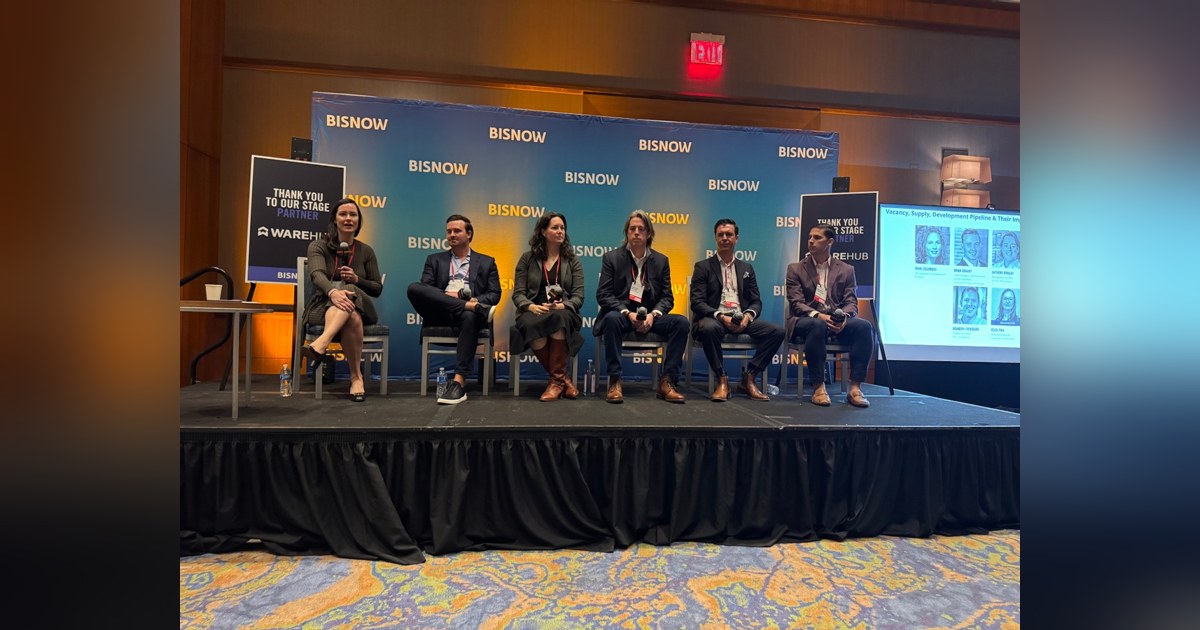
Industrial real estate is confronting a structural shift in how space is leased, occupied and monetized, and the strategies outlined by Warehub founder James Holbrook at Bisnow's Northeast Industrial & Manufacturing Conference in Jersey City on October 21 point to a more digitally connected future for the sector. Holbrook, who serves as Founder and Executive Chairman of Warehub, joined other industrial real estate executives to examine how evolving tenant requirements and changing supply dynamics are reshaping leasing decisions across the Northeast and beyond.
The core of Holbrook's message was that landlords and tenants should look past individual buildings and instead build digital infrastructure that lets occupiers adjust their real estate strategies, optimize distribution networks and reduce transportation costs. That emphasis on flexibility matters because supply chains have become less predictable and more demanding, forcing tenants to reconfigure warehouse footprints faster than traditional long-term lease structures allow. For institutional owners, the implication is that static building-level thinking may leave value on the table as tenants seek speed and adaptability.
Holbrook also highlighted how flexible, short-term leasing can convert industrial vacancy into revenue. Underused or empty space has long been treated as a drag on asset performance, but shorter lease commitments can help institutional landlords monetize that space in the near term while still preserving long-term leasing objectives. The approach offers a potential bridge between the need for stable, creditworthy tenancy and the reality that many occupiers now want shorter, more responsive arrangements.
Warehub is positioning itself around that gap by building what it describes as an operating system for industrial real estate, connecting demand, inventory and execution through a single intelligent platform. The company says it standardizes property data, digitizes leasing workflows and coordinates the participants needed to activate industrial space, enabling landlords, tenants and brokers to move from requirement to occupancy with more speed, transparency and efficiency. The pitch is that more deals can be completed with less friction and faster payment, which could matter as competition for functional industrial space intensifies.
The broader significance of the conference appearance is that it places digital infrastructure and leasing flexibility at the center of industrial real estate strategy at a time when vacancy and tenant demand are both in flux. For tenants, the promise is a faster route from requirement to occupancy. For landlords, the upside is a way to generate revenue from underused assets without abandoning longer-term leasing goals. Holbrook's remarks suggest the industry may increasingly be judged not only on the buildings it owns but on the platforms and processes that connect supply with demand. The full announcement, including downloadable images and bios, is available via click here, and more information on the company can be found at warehub.com.